







Rockwall County (October 9, 2025) – Many of our ancestors brought their favorite seeds from across the globe to North America, while Native Americans traded seeds each year to plant in their gardens. Seed saving is a practice that is an important part of agricultural and horticultural heritage worldwide.
Mark your calendars and start collecting seeds from your favorite annuals, perennials, herbs, veggies and more! Rockwall County Master Gardeners are excited to announce their second annual community seed swap to be held in January 2026. Once you start looking for dried flowers and seed pods in your landscape you will notice them everywhere. Collect seeds throughout fall and you will have quite the collection come January. We hope that the following information will give you the tips you need for successful seed saving.
It is best to save seeds from common open pollinated varieties. Open pollinated varieties are fertilized by bees, moths, birds, bats, and even the wind or rain. Seeds from open pollinated varieties will produce offspring with the same characteristics as the parent plant. Avoid saving seeds from hybrid varieties as their seeds will not produce offspring with the same characteristics as the parent plant. Hybrid plants are identified as such on seed packets and on plant labels.
Vegetables recommended for beginner seed savers are open pollinated beans, peas, tomatoes, and lettuce. Flowers recommended for seed saving are typically annuals, as perennials are usually most easily propagated by cuttings or division. Some of the flowers that are popular for seed saving include black-eyed Susan, calendula, foxglove, globe amaranth, marigolds, morning glories, nasturtiums, zinnias, and sunflowers. Popular herbs for seed saving are sage and basil.
Harvest your seeds after seed pods or flower heads have dried on the plant. This ensures that your seeds will reach full maturity. Plants such as lettuce, basil, and sage must be allowed to bolt or “go to seed” before seeds may be collected. Bolting is the production of a flowering stem. If you are unsure where the seeds are located on your plant, a Google or YouTube search will be helpful.
Once you have harvested your seeds, allow them to dry completely then store them in an airtight container. Label your seeds with the name of the plant and date of harvest. For helpful seed saving and seed swap tips, search for #rockwalltxseedswap on Facebook.
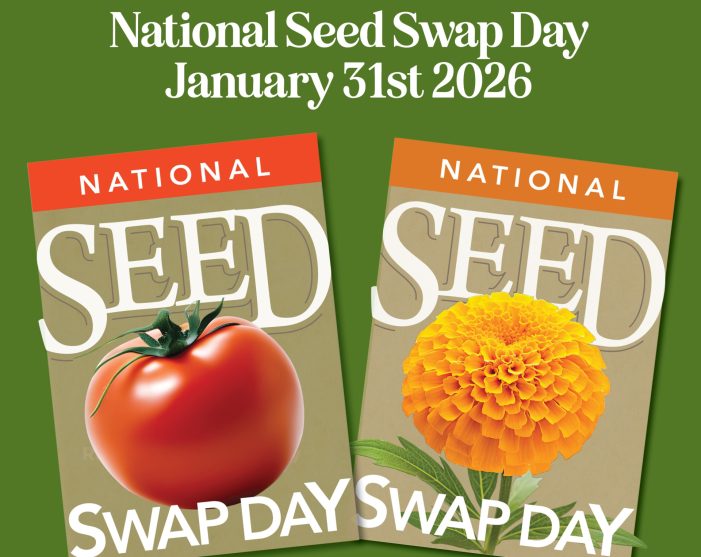
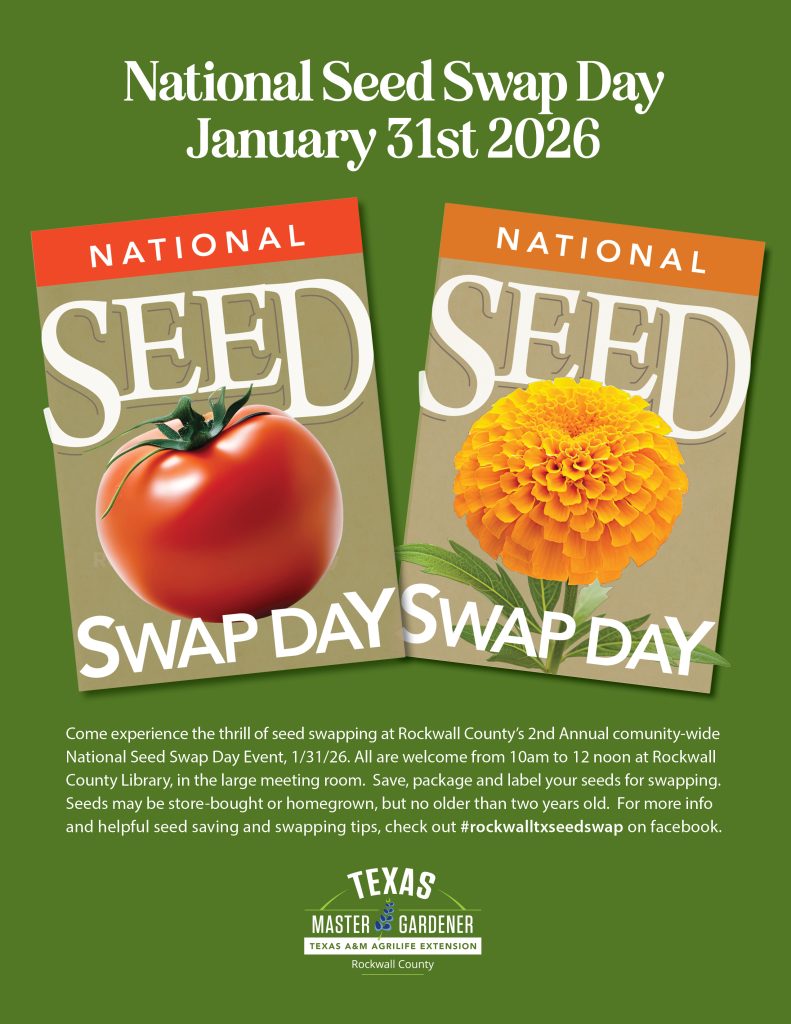
Pick a few of your garden favorites during this growing season and make plans to join in on the fun on National Seed Swap Day on Saturday, January 31, 2026 from 10am to noon in the large meeting room at the Rockwall County Library. You never know what amazing seeds you might go home with!
By Sarah Lawson, Rockwall County Extension Master Gardener, edited for publication in Blue Ribbon News.

Discover the practice of seed collection: Save seeds now. Swap later. added by Melanie M on
View all posts by Melanie M →