







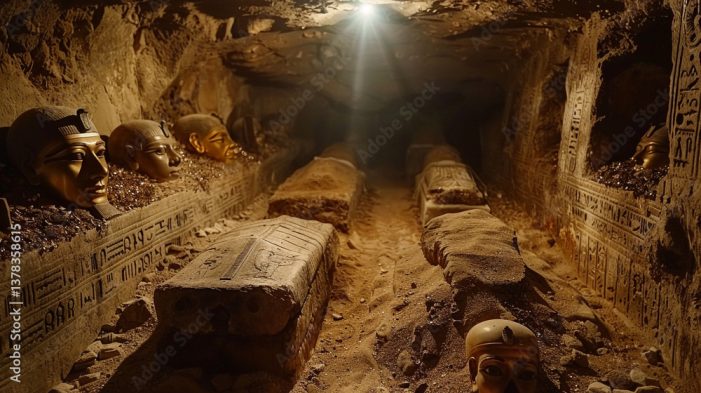
Rockwall, TX (October 22, 2025) – A would-be archeologist descended into an Egyptian mummy pit by candlelight. The stacked remains of shriveled 3,500-year-old bodies filled a long passageway. Suddenly, the pit collapsed under his weight, and he landed in piles of bones and rotted linen wrappings, choking in mummy dust.
That was in the early 1800s, and Giovanni Belzoni lived to tell his tale, now retold in The Victorians and the Holy Land: Adventurers, Tourists, & Archaeologists in the Lands of the Bible (2025). The author, Allan Chapman, a professor at Oxford University, has provided a wealth of historical facts that contributed to modern tourism.
Those who hope to see the “Holy Land” anytime soon may have to hold their horses. Many who had wished to visit Israel in the last two years have opted instead for a “Footsteps of Paul” tour to Greece and Turkey.
Tourists in 1869 actually did ride horses to see the Holy Land. They were roughing it compared to modern standards. According to Chapman’s book, this very first middle-class tour group included armed guards to protect the travelers from hostile tribes and roadside robbers. Within days of leaving London, the group had arrived in Alexandria, Egypt, with their tour guide, Thomas Cook, an entrepreneurial Baptist preacher. After a Nile cruise, they headed east on a newly completed road to Jerusalem. Their itinerary included: Solomon’s Pool, Bethlehem, Abraham and Sarah’s family burial site in Beersheba, the Dead Sea, the Sea of Galilee, and more.
Chapman says a landslide in tourism followed that 3-month adventure. By the early 20th century, Cook’s tourism company alone had taken some 12 thousand people to the Holy Land. The book further shows how this travel was rooted in Bible interest. Centuries before Egyptology became the rage, England had obtained the Bible in English and the printing press that allowed widespread reading. Old Testament stories of Joseph, Pharaoh, and Moses fueled curiosity about Egypt, and, when the time arrived, the desire to visit the Holy Land.
More than 500 years before Christ, the prophet Daniel received a vision that included words about the last days: “Many shall run to and fro, and knowledge shall increase” (Daniel 12:4*). From our historical perch, we know that travel and learning opportunities became widely accessible during the English Queen Victoria’s 1800s reign. Technological advances included faster trains, steamships, the electric light bulb, and photography, all of which served to open up world travel for the commoner, not just the wealthy.
However, mummies helped pave the way back to the long-ruined Holy Land. England and Europe were captivated after explorers of Egypt traveled home with golden artifacts and grisly remains from pyramids. (In the 1830s, a colleague of Belzoni became known for publicly unwrapping and dissecting mummies.) Museums sprang up to store and display the items, which served to generate the funds to support further exploration of ancient sites.
Many of us might recall the mummy madness of the late 1970s. Around six million people visited the Treasures of Tutankhamun exhibit that came to museums in six US cities. New York city alone raked in $100 million.
Concerning the future, Jesus described the world before the day of his return, especially one city. “Jerusalem” he said, “will be trampled by the Gentiles, … Now when these things begin to happen … lift up your heads, because your redemption draws near” (Luke 21:24, 28*).
The King who was buried without a golden coffin left only linen wrappings in his empty tomb. The One worthy of our captivation is accessible to all—without cost.
*New King James Version
 Faith columnist, Patti Richter, writes and edits Christian faith articles and has co-authored Signs of His Presence: Experiencing God’s Comfort in Times of Suffering. Read more of her essays on BlueRibbonNews.com. Submitted photo.

How Mummies Paved the Road to Jerusalem added by Melanie M on
View all posts by Melanie M →