







Seek not to understand that thou mayest believe but believe that thou mayest understand.
–Saint Augustine
Rockwall, TX (March 23, 2026) – My son’s modern home features invisible doors in the hallway—paneled walls without doorframes, knobs, or hinges. However, touch a flat disk on certain panels and—surprise—a bathroom or a closet is revealed.
We can likewise walk the corridors of life without perceiving anything on the other side. We might wonder if there’s a heaven or a God who cares for his creation. Many traverse this empty way even though they’ve heard of the Savior who offers eternal life (John 3:16). They might believe the Good News—mostly. Yet something keeps them passing by “the door” that is Christ (John 10:9*).
Two good books, one modern and one ancient, provide close-up views of faith resistance. Both writers lamented their sad and confused years before surrendering to God.
In 1950, Elizabeth Sherrill and her co-journalist husband began writing for a Christian magazine, Guideposts, before they actually came to Christ. While still in their 30s, the Sherrills interviewed both President Truman and Martin Luther King Jr. (whose heaven-focused serenity Elizabeth marveled at). Their regular interviews with people of faith left them hungry to know God.
In her memoir, Surprised by Faith: A True Story of Relentless Love (2014), Sherrill explained that she had always viewed God and heaven as myths. She further struggled to reconcile belief in God with the existence of evil. She could well relate to the testimony of St. Augustine, another intellectual who tried to reason his way to faith.
Augustine lived from A.D. 354 to 430, in the final years of the Roman Empire. Christianity had become legal, and its influence was all around him. But as a teacher of rhetoric in Milan, Italy, he thought the Bible fell short of the works of Greek philosophers.
As a young adult, Augustine wrestled against the same temptations of today: material and sensual desires, and status seeking (1 John 2:16). His autobiographical work, Confessions, describes the desensitizing effects of immoral theatre plays and violent arena games that captivated young men. Following heretical teachers and lofty-minded orators (similar to some current podcasters) kept Augustine in a spiritual haze.
In time, both Augustine and Sherrill came to realize their greater impediment to faith: laying down their self-rule to acknowledge Christ as Lord over their lives. However, both were deeply affected by the stories of believers around them whose testimonies planted seeds that took root in their hard but hungry hearts.
“The Lord is near to all who call on him, to all who call on him in truth,” says Psalm 145:18. Truth overcame Augustine’s defenses when he decided to study Scripture and sit under church teachers that included (St.) Ambrose, Bishop of Milan at the time. Realizing that all of his old arguments were exhausted, Augustine’s faith crisis swelled to bursting. He wrote, “I was dying a death that would bring me life.”
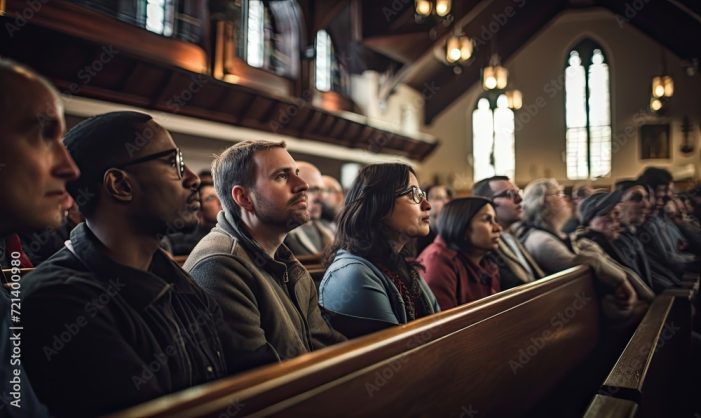
Like Augustine, the Sherrills’ needed a Christian community to cure their unbelief. They committed to attending church services for ten weeks straight. Elizabeth described this as her “faltering journey over my own prejudice, fears, and intellectual pride.” Her crawl toward surrender to God “felt like dying,” she said, adding, “How much joy I missed by failing to perceive His arms beneath me.”
In Matthew 7:8, Jesus says, “The one who seeks finds, and to the one who knocks it will be opened.” Whether we’re willing or wavering, walking or crawling to God, we find “the door” is patiently, mercifully, waiting there.
*All quoted verses: ESV
 Faith Columnist Patti Richter writes and edits Christian faith articles and has co-authored Signs of His Presence: Experiencing God’s Comfort in Times of Suffering. Read more of her essays at BlueRibbonNews.com.

Crawling toward Life: Overcoming Obstacles to Faith added by Melanie M on
View all posts by Melanie M →