








Rockwall, TX (March 25, 2026) – Delight is when you get to enjoy the “fruits of your labor” from the garden. Sadness is when your plants succumb to the elements, and you harvest nothing but disappointment. Even experienced gardeners can have pitfalls. Planting and tending a garden can require a lot of time, energy, and costly supplies. What if there was an easy way to grow greens indoors, accessible to anyone, and with “minimal” everything? Cue microgreens! Microgreens are nutritious edible seedlings such as radish, broccoli, kale, and cabbage. Super easy to grow indoors, microgreens are a great addition to any kitchen.
Anyone can grow microgreens. Because microgreens are ready to harvest in just 1-3 weeks, you never have to save space or care for the individual plants. With minimal effort and cost you can enjoy farm to table microgreens in as little as 7 days. These tiny seedlings just need water, light, and a place to grow. So easy, it is almost fool proof!
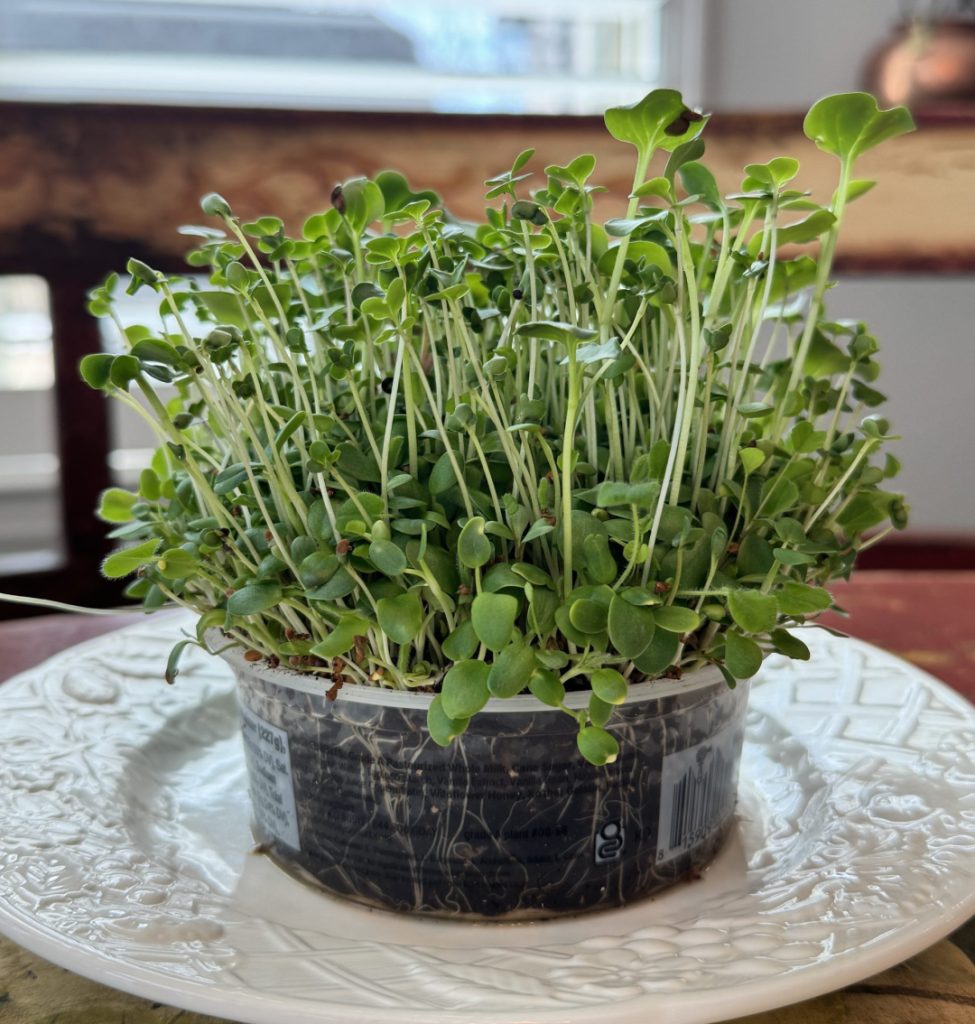
Minimal Supplies:
Seeds: any fast-growing seed mix will do: combinations of radish, broccoli, kale, cabbage, kohlrabi, or arugula seeds. Purchase microgreen seeds in bulk bags through independent seed catalogs or big box stores. (NOTE: nightshade seedlings like tomato, pepper, eggplant, or potatoes are toxic and therefore NOT edible).
Container: no fancy set-up required. Any small container will do as long as it can hold soil and drain/absorb water from the bottom. Containers with a depth of 2-4 inches work best, however, these microgreens will even grow in repurposed shallow berry containers.
Soil: unlike sprouts, microgreens are grown in a soil medium. Because they are harvested within 3 weeks, fertilizer or expensive soil is not needed. Cococoir and seed starting mixes are good choices for being light, free of sticks, and well-draining.
Light: a bright sunny spot near a south-facing window. (Grow lights can be used, but not required).
Set-up: water from the bottom (best method). Place your container on a dish or pan that can hold a small amount of water.
1, 2, 3, Let’s Grow!
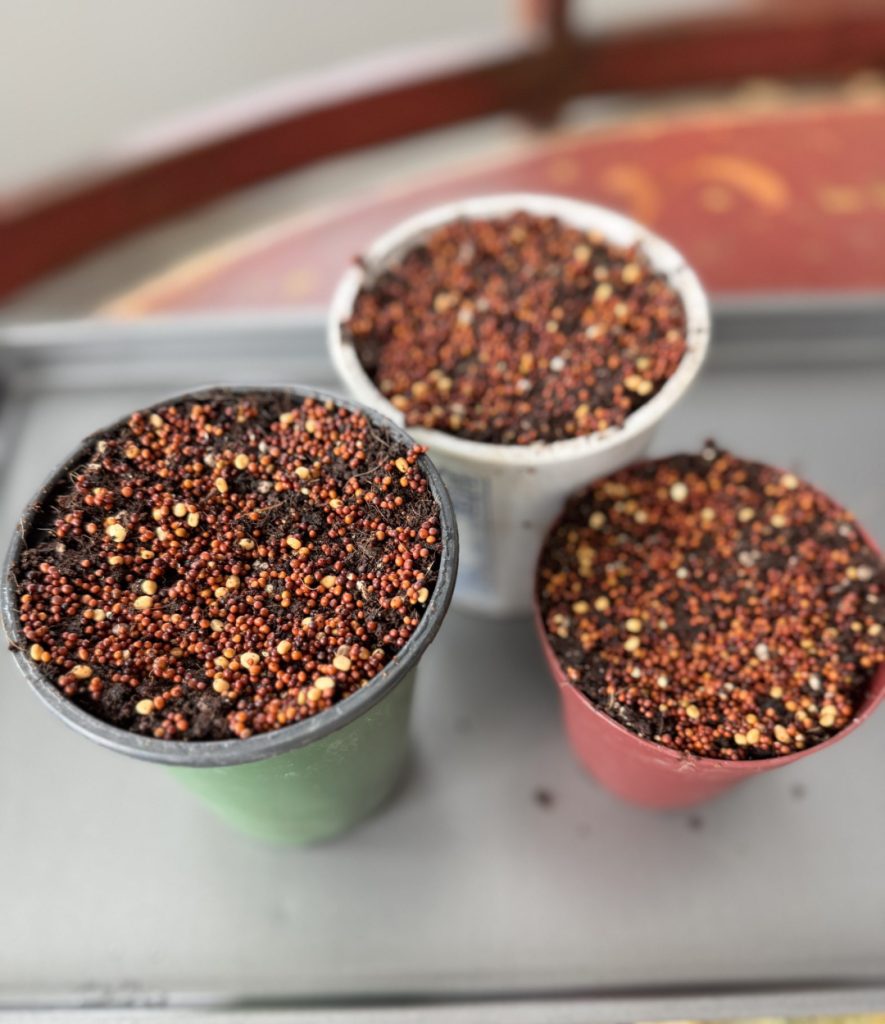
- Presoak 1-tsp of seeds for 6-8 hours in a dark cupboard. (Approx. 1 tsp of seeds for a 4 inch diameter container).
- Premoisten the soil before you fill the container all the way to the top. Place the container on a dish or tray.
- Rinse the presoaked seeds. Spread evenly over the surface of the moist soil and cover (darkness and humidity help with germination). Do not let the germinating seeds dry out. Gently spritz the surface of the soil/seeds with water to maintain moisture.
- After 1-3 days when the seeds have germinated, uncover and place the set-up near a south-facing window. Continue to spritz the soil’s surface to keep the delicate seedlings moist for a couple more days.
- When the first set of leaves (cotyledons) appear, water from the bottom by adding water to the dish or tray. (Do not water from the top anymore). Water as needed keeping the soil moist at all times.
- After 7+ days the new leaves are large enough to harvest. In the winter, the new leaves may take longer to grow so expect additional days of growth.
- Harvest a desired amount of microgreens by cutting the stems 1 centimeter above the soil’s surface.
- Rinse and enjoy!
Simple as that! Growing microgreens is surprisingly easy and satisfying for all ages and abilities. Start today and enjoy microgreens as early as next week. Stagger planting times a week apart for a continuous supply of microgreens. Plant, harvest, eat, repeat–all year long!

Mark your calendars for Rockwall County Master Gardeners Spring Plant Sale!
Shop In Person, Saturday April 18 9am to 2pm at Rockwall County Courthouse, 1111 E. Yellow Jacket Lane. Shop online April 1 through 11 and pick up your orders on April 18 during the sale.
The RCMGA Plant Sale will feature favorite summer annuals and perennials, vegetable transplants, spectacular Texas natives, select plants grown locally by Master Gardeners and more. Our Ask A Master Gardener booth will be staffed and ready for all of your growing and gardening questions throughout the sale. Go to txmg.org/rockwall for details.
Article and photos by Tiffany Ashton, Rockwall County Extension Master Gardener

Here We Grow: Growing Microgreens Indoors All Year Round added by Melanie M on
View all posts by Melanie M →