







Somewhere between a cocktail and a curiosity, I found myself going down one of those wonderfully winding rabbit holes I often find myself in.
It started with a phrase.
“Slow as molasses.”
You’ve heard it. You’ve probably said it. I know I have. But I got to wondering—what exactly is molasses, and why don’t people eat it anymore?
 What I discovered is that molasses isn’t just a quaint old-time ingredient tucked into your grandmother’s gingerbread recipe. It once played a starring role in American kitchens—and, perhaps more interestingly for our Drink.Dine.Unwind. series, behind the bar.
Molasses is the thick, dark syrup left behind during the sugar-making process, and before refined sugar became cheap and common, it was one of the primary sweeteners in early America. But it didn’t stop at baking. Molasses was also a key ingredient in the production of rum, particularly in colonial New England, where distilleries turned it into spirits that fueled both commerce and conversation. In many ways, molasses helped lay the groundwork for early American cocktail culture—long before we were garnishing drinks with dehydrated citrus and rosemary sprigs.
But here’s where that innocent little phrase took a turn.
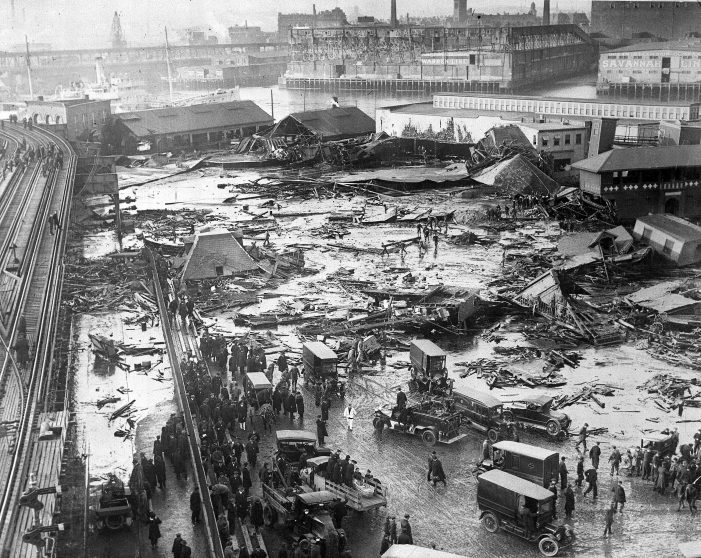
My search led me to a story so bizarre it almost doesn’t sound real—the Great Molasses Flood of 1919 in Boston. Yes, you read that right. A flood. Of molasses.
A massive storage tank holding more than two million gallons of molasses suddenly burst, sending a 40-foot wave of thick, sticky syrup through the streets of Boston at astonishing speed—reportedly up to 35 miles per hour. Buildings were knocked off their foundations. Horses, wagons, and even people were swept away. In the cold weather, the molasses quickly thickened, trapping victims where they stood. Lives were lost. It was, quite literally, a tidal wave of glue—and the city was left coated in a substance most of us associate with cookies and baked beans. Tragic, surreal, and oddly fascinating all at once.
And suddenly, “slow as molasses” didn’t feel quite so simple anymore.
Because here’s the thing—molasses is slow… until it’s not. Under the right conditions, it can move with surprising force, reminding us that even the most unassuming things can carry unexpected weight.
In a world that moves fast—where dinner is often rushed and drinks are ordered on the go—I find myself drawn to these little pauses. These moments where a phrase leads to a story, and a story leads to history, and history somehow circles back to what’s on our plate or in our glass.
So the next time you hear someone say “slow as molasses,” maybe you’ll think not just of something lagging behind—but of old kitchens, early rum distilleries, and one very unforgettable day in Boston when molasses made history in the most unexpected way.
And maybe you’ll take it as a gentle reminder to slow down…at least when it comes to enjoying a good meal, a well-made drink, and a story worth telling.
By Dawn Redig, Blue Ribbon News.

Drink.Dine.Unwind. | Molasses is slow…until it’s not added by Editor on
View all posts by Editor →