







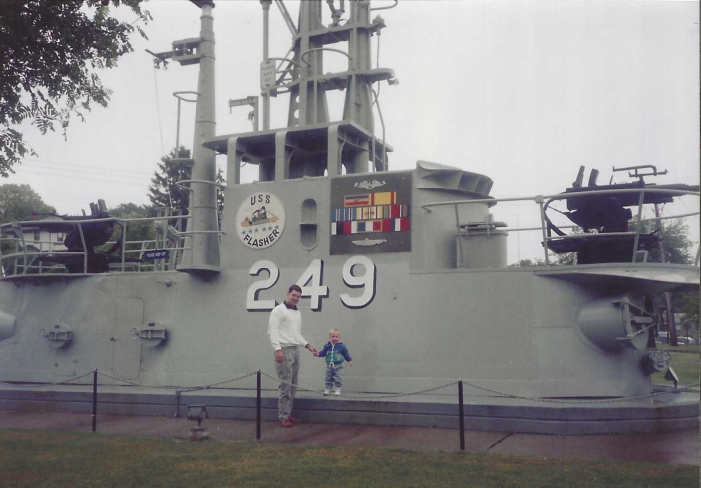
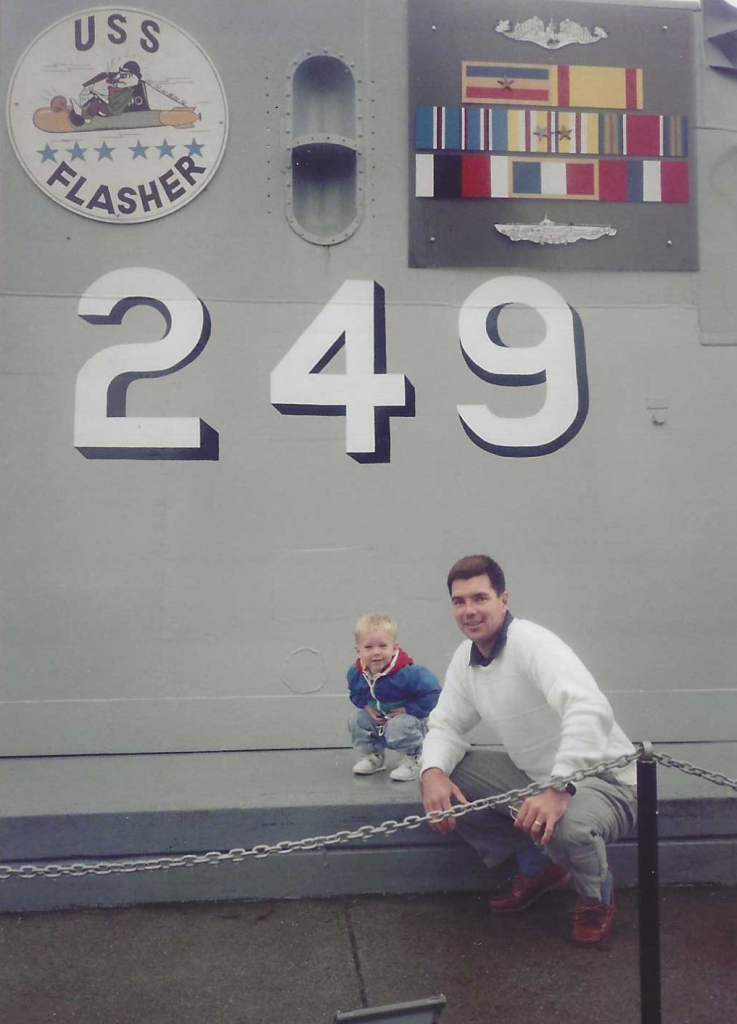
A treasured memory shared by longtime Rockwall resident and retired Army Lieutenant Colonel Max Corneau with his own son, Justin, 3, when they visited the Flasher conning tower in Groton, CT shortly before she became the centerpiece of the national submarine memorial.
(April 21, 2026) On Saturday, June 20, 2026 the National Museum of the Pacific War, also known as the Admiral Nimitz Museum in Fredericksburg, TX, will dedicate a memorial plaque to the World War II submarine, USS Flasher. The Flasher (SS-249) was a Gato-class submarine credited with sinking more Japanese shipping tonnage than any other U.S. submarine in World War II. Longtime Rockwall resident and retired Army Lieutenant Colonel Max Corneau’s late father was a “plank owner” who served on Flasher from her commissioning in September 1943 until her decommissioning in 1946.
During a recent visit to the Nimitz Museum, Corneau was extremely impressed with the historical quality and dedication to service conveyed throughout the entire facility.
“Students of military history will recognize that this is a serious museum that records the facts of the day, while also capturing the essence of the human condition…the triumphs, challenges, and suffering,” he said.
The Nimitz Museum features the conning tower of the World War II submarine USS Pintado (SS-387). Corneau was drawn to this outdoor feature and explained, “I saw the conning tower and knew it was a Balao-class sub, the one after my dad’s. After walking around the bow of a beautifully designed architectural feature of the submarine surfacing, I found the Memorial Wall and began reading the plaques.”
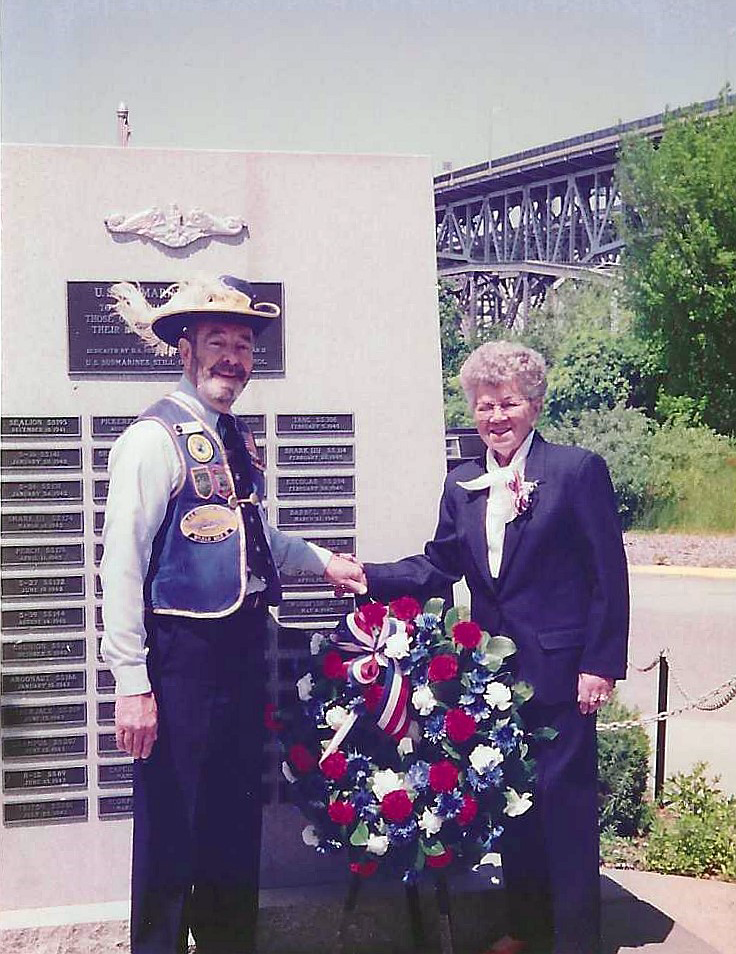
The West Memorial Courtyard of the Nimitz Museum is home to World War II submarine dedications. Corneau explained his emotional experience: “There was a beautiful 20” x 20” plaque dedicated to the USS Dace (SS-247) that made me hear my dad’s voice. Once we were at the National Submarine Memorial in Groton, CT and my dad explained that over 3,500 submarine sailors died in the war. He said this represented about 20% of the U.S. submarine force, the highest percentage of any American service branch in the war. Then he pointed to the wall and showed me the granite markers for SS-248 and SS-250…these were the submarines launched immediately before and after his submarine, number SS-249. My dad was not prone to emotion and he just said he had a lot of friends on those boats and it was just fate that he was not on them.”
Returning home to Rockwall, Corneau could not stop thinking about the lives lived and the lives lost in World War II and what it meant to future generations. He reached out to William R. “Dick” McCants, son of Flasher’s Executive Officer and the foremost expert on the USS Flasher history as author of War Patrols of the USS Flasher. Together the two men set out to create a plaque dedicated to the Flasher and her crew. For without the skill and bravery of her commanders, Reuben T. Whittaker and George W. Grider, and the dedication of her crew, the following generations would not have lived and history would be very different.
Asked about what he hopes the Flasher memorial plaque will achieve, Corneau, a seasoned combat veteran with 24 years of service, reflected, “As the son who stood beside his father at that memorial wall years ago, I understood then what this plaque will mean to future generations who pause to read it.”
The public is invited to the dedication of the Flasher memorial plaque at 10 am on June 20 at the Nimitz Museum in Fredericksburg, TX.
Story and photos shared by retired Army Lieutenant Colonel Max Corneau, longtime Rockwall resident and Blue Ribbon News contributor.

Rockwall Son Honors WWII Submarine Legacy at Nimitz Museum added by Editor on
View all posts by Editor →